

Your New Journey Starting From Zero
Starting your journey from zero can feel daunting. Staring at two tests, a mountain of technical terminology and all the anxiety of starting your career in IT, where do you even begin? The answer is not just studying until your brain hurts, but studying with intent and focus. Using the CompTIA A+ practice test to prepare for the CompTIA A+, you will have an exact path to go from no knowledge of A+ to passing the CompTIA A+. This guide will explain how you can effectively study using A+ practice test questions to build confidence, identify areas that need improvement, and walk through the door of the examination center ready for success!
Currently, CompTIA A+ exams consist of two parts: 220-1101 (Core 1) and 220-1102 (Core 2). Both parts encompass numerous subjects that are foundational to computer support. To be successful in passing these exams, an individual must understand basic computer hardware (e.g., printers, motherboards), be able to diagnose software-related issues across multiple operating systems (Windows, Mac OS X, and Linux), implement basic security measures, and have a great deal of experience helping clients with computer problems. Using the correct CompTIA A+ exam questions will help you prepare to take the A+ certification examination.
What is the CompTIA A+ Certification?
The CompTIA A+ Practice Test is the most widely accepted way to establish yourself in the field of Information Technology. This certification goes beyond just being a piece of certification; the A+ is the industry standard for having the foundational skills needed for IT support roles today and in the future. A+ is not tied to any vendor like Microsoft or Cisco, meaning it teaches you skills that are usable across various vendor platforms. Therefore, A+ Certification is the ideal entry-level certification for anyone wanting to begin a career in technology. By placing the A+ certification on your resume, potential employers will understand that you have the knowledge and skills necessary to support the core aspects of today's computing world.
Career Opportunities with A+ Certification.
The A+ Certification opens many doors to you when you obtain it. It qualifies you for positions that are either entry-level or early-career, that are in continuous need. Common job positions include:
- Help Desk Technician: The primary person users interact with when they have software or hardware problems and need support.
- Desktop Support Specialist: This role goes one step further than the Help Desk Technician and involves more complex installations, assembly, and support of an organization's computers.
- Field Service Tech: The Field Service Tech uses their skills when travelling to support clients' equipment.
- IT Support Specialist: This role covers a broader spectrum, including the setup and maintenance of systems, the basic security principles, and the training of users.
Your A+ Certification is your formal introduction to being able to do the job and provides a foundation for choosing a specialization later in Networking, Cyber Security, or Cloud Computing.
Exam Structure & Objectives
Before you can successfully answer the CompTIA Exam Questions, you must first understand the battle you are fighting. The A+ Certification consists of two separate exams, Core 1 (exam 220-1101) and Core 2 (exam 220-1102), both must be passed in order to earn your A+ Certification. The exam content is divided into sections that cover the full breadth of the IT professional's job duties.
The Core 1 exam focuses on physical, mobile technology, networking technology, Hardware, Virtualization and Cloud technologies.
The Core 2 exam focuses on Operating Systems (Primarily Windows, but also Linux, Apple, Android and iOS), Security, Software Desktop Troubleshooting and Operating Procedures like Communications and Safety.
Current Exam Series
The current exams are Core 1 (220-1101) and Core 2 (220-1102). It is important that you confirm this yourself with Comptia to ensure you are studying the most recent objectives. CompTIA updates the Objective approximately every three years to reflect changes in technology. The exams consist of three types of questions: Multiple Choice, Drag and Drop, and Performance-Based Questions (PBQ).
In order to be prepared for and do well on the PBQ portion of your exam, you should repeatedly practice using a Comptia A+ Practice Test. PBQs replicate real-world troubleshooting situations. Examples of PBQ types would be configuring a Wireless Network and troubleshooting a Computer Boot Process. By practicing and mastering each of these domains, you will position yourself to be a successful Examination Candidate.
Active Practice Versus Passive Study
The difference between active and passive study is very important. While reading or watching videos is a great starting point, it does not provide an opportunity to apply what you have learned. Simply feeling like you understand something until it is time for you to start your exam and then being "on the spot" will often lead to you not performing as well as you should.
Build Your Brain
Practice test questions for CompTIA A+ exams serve two essential purposes. First, practicing for the A+ exam removes the comfort of the study guide and helps you to apply what you have learned. Second, practice test questions prepare your brain to perform as needed on the actual A+ exam format (how questions are worded, how multiple-choice logic is used, and what performance-based tasks must be performed). You are not just preparing for the exam; you are preparing to take the exam.
More Helpful for Beginners
If you are new to computer support, it is critical for you to take a CompTIA A+ practice test as soon as possible. By taking a practice test early on, you will be able to see the areas in which you still need to gain knowledge and experience. This will not only help reduce the anxiety of taking an unknown exam but will help you to understand how the exam works as a collection of specific problems. You will gain confidence with every question reviewed. Tracking your progress is important. Using one of the latest technologies, you will have the ability to monitor how much better you are doing, especially as you close the gap in your knowledge base.
Use the Practice Test Blueprint to Create Your Study Plan
The Practice Test Blueprint is the primary component in your study technique. Follow the steps listed below in numerical order.
Step 1: Determine Your Best Level
Start by locating a reputable exam preparation company. Take the practice test in its entirety without studying. Your initial effort should not be viewed as a test of your ability; rather, it should be used to evaluate where you are and be the map of your study path. By determining your score as well as which domains you were stronger or weaker in, this practically establishes a targeted study plan.
Step 2: Creating a Personal Study Plan
Create a study timetable for yourself that lists out the topics to focus on each week. Focus your study effort on the domains you have determined to be the weakest based on your baseline test. A pattern of dedicating at least one hour daily to studying is far more effective than cramming all day Saturday.
Step 3: Learning Concepts Not Just Answers
In fact, this step is the single most important step when it comes to preparing yourself to take the CompTIA exams. Although there will be many exam questions to evaluate, especially for those questions that you miss, each question provides you with an opportunity to extend your understanding of the topic behind the question. Simply memorizing answers will not work when it comes to taking the test, as the test is designed to evaluate your ability to apply the knowledge that you have learned.
Step 4: Finding Reference Material to Understand Core Topics
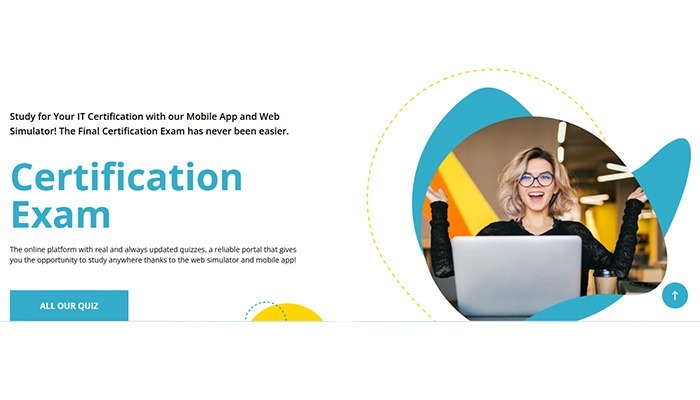
In order to transform your mistakes into knowledge, you must have access to reliable reference materials. Your reference materials must have clear explanations of the answers to your questions in order to connect the dots between the question you missed and the broader concept associated with the question. One study platform that covers this type of in-depth learning is Certification-Exam.
Certification-Exam goes above and beyond the typical question/answer study methodologies by offering you a structured environment in which you can learn from every question you miss. Each answer has a detailed explanation provided with it, you can adjust the study platform to focus on your areas of weakness, and all of the study materials supplied are aligned with the examination objectives.
When you use the tools available through Certification-Exam (Practice and Simulated Exam Mode, Offline Access, Review of Concepts), you will be able to methodically convert your mistakes on the test into long-term knowledge, and in many cases, Certification-Exam offers discounts that allow you to get started on preparing for your exam quickly.
Step 5: Testing should be done in intervals.
Do not keep taking the same test over and over again until you have memorized it. Space your tests out differently. Each time, choose a different bank of practice exam questions. Set an exam benchmark (e.g., If you can get 90% or higher on multiple test attempts on the same set of questions, schedule your exam).
Step 6: Review and Reinforce Information Constantly
Use flashcards to memorize port definitions or command line prompts. Leverage a simulation tool to gain experience with virtual hardware. The objective is to keep the information fresh using both short-term and long-term storage.
Best Practices/Tools for Practice Tests
You must have quality material when preparing to take the exam. The official CompTIA practice exams are the benchmark for quality, type, and difficulty of question style, as well as how best to prepare for your exam. Online, non-official (Dion Training, Professor Messer) provides numerous great quality practice question banks; each set of practice exam questions has detailed solutions. Use any free or paid application to quiz yourself while waiting in line. Use forums to discuss difficult CompTIA questions you may have; to teach a concept to someone else, you must first learn that concept.
Strategies for Managing the Test Day Experience
You have done your research and prepared well; now it's time to manage the test experience itself. Watch Your Clock. Read every question twice as the wording on CompTIA Exam Questions may be very misleading. For most scenario questions, start by eliminating obvious incorrect answers. If you start to panic, take 3 deep breaths; you have prepared for this; you've seen numerous practice exam questions; trust the process.
Summary
Getting from 0 to passing your CompTIA A+ Exam will take time; however, with a good plan, you will reach your goal of passing the CompTIA A+ exam in a timely manner. A good plan includes using the practice exams not only as a "final" check but as your foundation for studying for the CompTIA Exam Questions. The practice exams provide diagnostic tools, create learning tools, and allow you to develop test-day muscle memory. Stop wondering whether you're prepared; today, take that first, scary baseline practice exam. Your IT career is waiting.

Leave a Reply