

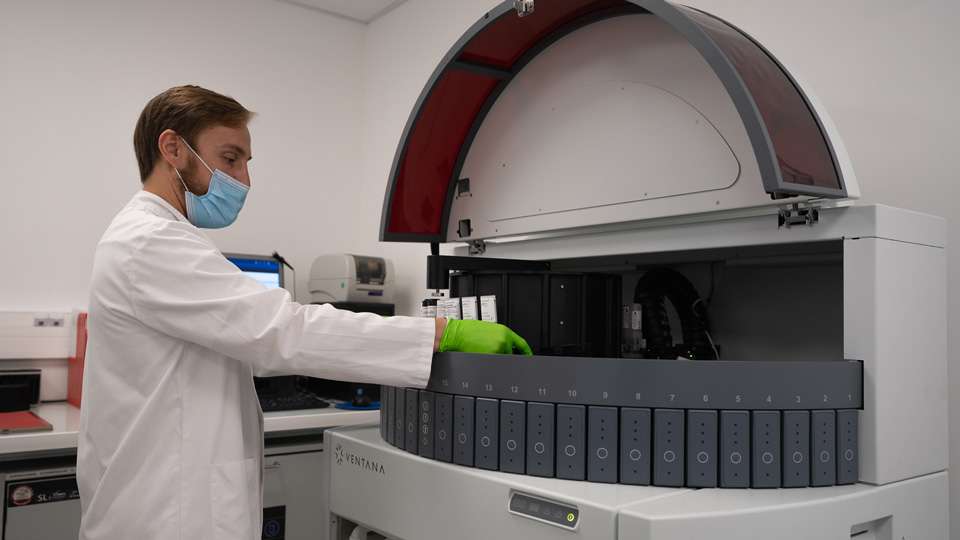
In the rapidly evolving world of biomedical and pharmaceutical research, accurate tissue analysis remains one of the most critical pillars of scientific discovery. This is where IHC CRO services play an essential role — providing high‑quality immunohistochemistry (IHC) testing and expertise through Contract Research Organizations (CROs). For researchers, biotech companies, and pharmaceutical developers, outsourcing IHC tasks to specialized CROs can significantly improve data quality, accelerate timelines, and optimize research budgets This company.
What Are IHC CRO Services?
IHC CRO services refer to the immunohistochemistry testing, analysis, and consultation offered by specialized contract research organizations. The core purpose of IHC is to detect and visualize specific proteins within tissue samples using antibody‑based staining. This technique enables researchers to understand protein expression patterns, cellular localization, and tissue morphology — all of which are essential for drug discovery, biomarker validation, pathology studies, and translational research.
A CRO specializing in IHC brings technical expertise, validated protocols, advanced imaging systems, and quality control standards that may be beyond the scope of in‑house laboratories. By partnering with an IHC CRO, research teams can remove bottlenecks associated with staffing, equipment cost, method development, and regulatory compliance.
Key Components of IHC CRO Services
-
Custom Assay Development
-
Tailoring IHC protocols to detect specific antigens relevant to study goals.
-
Optimization of antibody concentrations, antigen retrieval methods, and detection systems.
-
Validation using positive and negative control tissues.
-
-
Multiplex IHC
-
Simultaneous detection of multiple targets in a single tissue section.
-
Valuable for complex tumor microenvironment studies and immune profiling.
-
Requires advanced imaging, spectral unmixing, and specialized analysis software.
-
-
Tissue Staining and Slide Preparation
-
Automated or manual staining services for large sample sets.
-
Consistent processing to reduce variability and enhance reproducibility.
-
High‑quality slide scanning and digital archiving.
-
-
Quantitative Image Analysis
-
Computer‑assisted quantification of protein expression.
-
Objective measurements of staining intensity, distribution, and cell counts.
-
Integration with digital pathology tools for advanced interpretation.
-
-
Pathology Review
-
Expert pathologists provide interpretation and report generation.
-
Correlation of IHC results with histopathology findings.
-
Essential for regulatory submissions and publication‑ready data.
-
-
Consulting and Study Design Support
-
Guidance on experimental planning, antibody selection, and data interpretation.
-
Recommendations for statistical analysis and validation strategies.
-
Helps reduce experimental errors and improve study outcomes.
-
Why Outsource to an IHC CRO?
1. Expertise and Technical Rigor
Performing IHC staining and evaluation involves complex variables such as antibody specificity, tissue handling, antigen retrieval techniques, and detection systems. A reputable IHC CRO service provider has seasoned technical staff trained in best practices, reducing the risk of inconsistent or misleading results.
2. Advanced Technology and Automation
Top CROs invest in state‑of‑the‑art platforms like automated stainers, high‑resolution slide scanners, and artificial intelligence (AI)‑enabled image analysis. These systems deliver superior precision, speed, and throughput compared with manual processes in typical academic labs.
3. Cost and Time Efficiency
Maintaining in‑house IHC capability can involve substantial equipment, reagent, and personnel costs. Outsourcing allows research teams to access high‑performance testing on a project basis without the burden of capital investment. This flexibility is especially beneficial for startups and academic labs with limited resources.
4. Scalability for High‑Volume Projects
Whether a project requires hundreds or thousands of tissue samples, an IHC CRO can scale its workflow accordingly. Many CROs offer dedicated capacity for large studies such as clinical trial biomarker evaluations, reducing turnaround times and ensuring consistency across samples.
5. Data Quality and Regulatory Confidence
High‑quality data is critical for regulatory submissions, publications, and intellectual property claims. CROs generally follow rigorous quality management systems, documentation standards, and compliance with GLP (Good Laboratory Practice), ensuring that results are defensible and reproducible.
Typical Industries That Benefit from IHC CRO Services
Pharmaceutical and Biotech Companies
IHC is widely used in drug discovery and development to support target validation, mechanism‑of‑action studies, and proof‑of‑concept evaluations. For oncology applications in particular, IHC biomarkers can inform patient stratification and response predictions.
Academic and Research Institutions
Many academic labs lack the infrastructure or expertise to perform high‑throughput IHC analysis. CRO partnerships allow researchers to focus on scientific questions while leaving technical implementation to experienced service providers.
Clinical Diagnostic Development
Companies developing diagnostic assays often need trustworthy IHC data for commercialization and regulatory approval. CROs with clinical experience can support trial sample analysis and analytical validation studies.
Medical Device and Pathology Services
Some medical devices or digital pathology tools require reference IHC data for benchmarking. CROs provide tested and validated tissue panels that help developers evaluate the performance of emerging technologies.
How to Choose the Right IHC CRO Service Provider
Selecting the right partner for IHC CRO services is a strategic decision that can shape the success of your research program. Here are key factors to consider:
-
Technical Expertise: Look for CROs with a proven track record in IHC methods relevant to your project.
-
Technology Platforms: Ensure they offer advanced imaging, multiplexing, and analysis capabilities.
-
Quality Standards: Certifications, quality management systems, and validation practices are critical.
-
Communication and Support: Clear project planning, reporting timelines, and responsive scientific support enhance collaboration.
-
Flexibility and Customization: The ability to tailor protocols and reporting to your needs is valuable, particularly for unique research questions.
-
Turnaround Times: Efficient processing and delivery without compromising quality is essential for project success.
Future Trends in IHC CRO Services
The field of immunohistochemistry continues to evolve with innovations such as:
-
AI‑driven image analysis: Automated pattern recognition and predictive analytics are reducing human interpretation limitations.
-
Spatial biology integration: Coupling IHC with spatial transcriptomics and proteomics for richer tissue characterization.
-
Cloud‑based data sharing: Streamlined collaboration and remote access to annotated IHC datasets.
-
High‑plex technologies: Supporting dozens of markers in a single tissue section to unlock deeper biological insights.
As demand for high‑quality tissue analysis expands across research and clinical domains, IHC CRO services will remain indispensable — enabling scientists to unlock the full potential of their data with confidence, speed, and scientific rigor.

Leave a Reply